Showing posts with label London. Show all posts

Wednesday, 31 January 2024

Don't make road pricing a tool in a "war on cars"

The BBC website, under its “Future Planet” science-based section, published an article on 23 January 2024 called “From London to New York: Can quitting cars be popular?” It has received quite a bit of acclaim, but although the article does make a case for the benefits of reducing car traffic in major cities, it is largely one-sided in a way that, largely, “preaches to the choir” about a wide range of policy measures with the objective of making driving less attractive in cities.

Road pricing is a powerful policy tool that can significantly improve the efficiency and the environmental impact of a road network, as well as providing an efficient way to fairly recover the costs of capital and maintenance of the network and ensure demand does not overwhelm supply. It can also generate net revenues for improvements, or simply net revenues as a return on the capital tied up in the network, for complementary purposes, such as improving infrastructure for alternatives.

However, undoubtedly the biggest barrier to implementation of road pricing is concern that it is a tool to penalise and punish, or to tax, rather than a tool to deliver better outcomes for those who choose to pay, as well as those who benefit from less congestion and well-maintained roads. This includes those riding buses on them, walking, cycling and those who live, work or own businesses, or community facilities adjacent to roads.  It is extraordinarily difficult to convince the public and as a result, many politicians, that any form of road pricing should be introduced, because many don’t believe there are benefits to them from pricing roads.  It is difficult enough to convince people that electric cars should pay a distance-based road user charge, because they are not subject to fuel tax, let alone convince people to pay governments to use roads directly.

This article doesn’t help in changing that perception.

There are real perceptions about a war on cars, the article cites someone who produces a podcast called “War on Cars”, so it isn’t entirely a conspiracy theory. There have long been policies to discourage car use in cities, whether it is removal or caps on parking, slower speed limits, traffic light phasing or reducing road capacity. Road pricing can have a range of objectives, but to treat it only as a tool to reduce driving, rather than also a tool to improve the conditions for those who remain on the road, is a mistake.

There are precious few congestion pricing systems in operation around the world. In Europe there remain only five cities of scale with congestion pricing: London, Stockholm, Gothenburg, Milan and Olso although plenty more have investigated it (and a few Norwegian cities with toll rings that exist primarily to raise revenue).  Abu Dhabi, Doha and Dubai all have pricing systems, and further east is Singapore. New York will be the first in the US, but Lower Manhattan is very different from pretty much any other urban area in the US.

The reason for this is public opposition. 

It’s absolutely true that after pricing is introduced it generally gains better acceptance, as sceptical drivers notice that the impacts are not bad, and in some cases improve conditions. This is certainly the experience in London and Stockholm, although it was not the experience in Gothenburg, because Gothenburg’s congestion tax was applied far too broadly, in geographic and temporal terms (to locations at times where/when there was no congestion). Opposition after it was introduced persisted for some years. A referendum held a year after it was introduced in 2013 saw 57% oppose it, but it was ignored as local politicians had committed to spending the revenue on large projects (and there was no other means to pay for them). 

The article quotes Leo Murray, director of innovation at climate charity “Possible” saying “We can't find a single example of a traffic-reduction measure that's been in place for more than two years that's then gone on to be removed because of a lack of public support”.

Well, I can. It’s the Western Extension of the London Congestion Charge. It was introduced in 2007 and removed at the end of 2010. It was removed because it was poorly designed (it granted residents in one of the wealthiest parts of London a 90% discount for driving into the central zone), poorly focused and implemented for partisan political reasons (the Mayor of London wanted to target a wealthy area, but perversely gave them discounts to drive to the centre of London that poorer area residents did not have). 

So, in short, you can’t just introduce road pricing and assume the public will accept it. Note the Stockholm congestion tax referendum is cited as giving its scheme approval, but in fact the referendum was held across many municipalities across metro Stockholm, where a majority voted against the congestion tax, and it was only by ignoring those other municipalities that it was said that the majority voted for the congestion tax. Stockholm Municipality voted for it, but only consists of 38% of the population of metro Stockholm. Had the votes in all Stockholm municipalities been taken into account, it would have been a vote of 52.5% against road pricing.

Again, the article seems to be dismissive of how hard road pricing is to introduce.

The article returns to London with the correct point that the congestion charge was more popular after it was introduced, but with the closure of the Western Extension, the congestion charge in London has the same geographic scope as it had when it was introduced in 2003, which is roughly 1% of the area of metropolitan London.  It hasn’t expanded because there isn’t the political will or public support, in no small part because congestion in central London has essentially returned to pre-congestion charge levels.  It is difficult to convince the public that expanding the congestion charge will reduce congestion, when the existing charge has not kept up with demand, and when significant amounts of road capacity is reallocated from general traffic to cycling and walking capacity.  London was a success, but why has no other UK city (Durham doesn’t count in this context) have a congestion charge?  It’s fairly basic – too many of those advocating for it, don’t want to deliver any benefits to those who would pay it.  Furthermore, it’s simply wrong to cite the ULEZ expansion and ignore the significant opposition to it.  

New York’s implementation of the Central Business District Tolling Program is cited as a key example, and questions whether New York has learned from elsewhere, although it is a stretch to call it congestion pricing.  The article says “The scheme will also operate a fluctuating charge system, with smaller fees during off-peak hours, providing flexibility”. The charges don’t “fluctuate” unless it is meant that they have just two time zones over a 24 hour period (which are different during weekend. Off-peak is… 2100-0500 weekdays. Unless you are currently driving around 2000 or 0530, you probably don’t think this is “flexible”.  The London Congestion Charge has shorter operating hours, and although it is a flat fee, 0700-1800 weekdays provides a bit more flexibility to avoid it. 

Its program is designed primarily to raise revenue for the ailing subway network, which is desperately in need of capital renewal.  Reducing congestion and emissions matter, but it has been designed, in terms of hours of operation and scope, to raise money.  This is all very well, but lower Manhattan is hardly translatable to most other cities in the USA. I’m sceptical as to whether it will generate more than some more studies in the next five years, just because of the tendency of many engineering consultancies to simply look to “copy and paste” what is done in another city onto whatever city they are commissioned to study.  That would be a mistake and would take road pricing backwards in any city that simply commissions a quick study from people with no experience on the topic, to just “do a New York”.  This is what happened in the UK for a few years after London (although Manchester had quite a different scheme design), and nothing came of it.

The BBC article goes off-topic when it claims Oregon is “considering following suit”, by saying it is testing a “more extensive system” based on vehicle-miles travelled. No it is not. This is the OReGO program, which is testing road usage charging (RUC) as a way of charging electric and other ultra-fuel efficient motor vehicles to use all public roads in Oregon, as a replacement of state fuel taxes. It is absolutely not planned to reduce car traffic, and is not focused on cities. It is about sustainable and fair charging of light vehicles to pay to maintain the road network, and it is really important to keep these objectives distinct and different. 

I hope New York can spur wider interest in the US for congestion pricing, and not on the basis of overly simplistic drawing a cordon around a downtown area. There are a range of different solutions, depending on the definition of the problem, but regardless of what is considered, it is extraordinarily difficult to get social licence, so to speak, for congestion pricing when a key objective is not to reduce congestion and improve travel times for those that are expected to pay.

In that context the global examples worth citing as success stories are Singapore, Stockholm and the evolution of the Oslo toll ring to a congestion charge.  London as a success story lasted around five or so years.  The world is littered with studies that went nowhere. Hong Kong has been studying congestion pricing for nearly 40 years, Copenhagen, Helsinki and the Netherlands more generally have tried and failed due to public opposition.  Consider that many would perceive those cities (and country) to have enviable standards of public transport, and levels of cycling, and it is still difficult.

Congestion pricing can deliver so many potential benefits for cities, firstly by freeing up sclerotic networks that drag productivity and efficiency down, by adding to the cost of freight and the cost of services needed to make cities function.  So much is invisible, because it is not delivered by government, but electricians, plumbers, builders, painters, tilers etc, all can do less at higher cost, because of congestion, and almost none of them have any modal choice.  Road freight supplies the food, the clothing, the consumables (toilet paper!), the appliances and building materials that keep people alive and keep infrastructure maintained.  Then there are people who need cars for specific trips, either because of where they are going or what they are carrying, or more generally there is urgency in a trip, such as for medical purposes or an urgent appointment, or a flight.  Big cities work well with all modes well catered for, and operating efficiently, but buses can't always have their own lanes, and get caught up in traffic.  

Roads that enable traffic to flow efficiently help all of this, they also help contain emissions by not wasting fuel on either idling or erratic stop/start movements (this includes EVs), and improve access, as gridlocked streets hinder everyone (let alone emergency services from time to time).  It is entirely understandable and logical to seek to reduce car traffic on some city streets, because of how space inefficient they are, but cars have their place. In central London many users of the congestion charge are occasional drivers, on one-off trips for any variety of reasons (e.g., medical appointment, collecting a purchase) and the use of taxis and rideshare services reflects demand that is met by more car use elsewhere.  Road pricing can deliver significant modal shift and can reduce travel demand, but in doing so it shouldn't be seen as a tool to punish drivers, but just the application of a concept (price) to an underpriced and scarce resource - road space.

While I always encourage those seeking to promote road pricing, the record of the past 25-30 years (since technology has made electronic pricing feasible) is that it is very difficult to implement because of public acceptability.  Seeing it or promoting it as a tool to wage “the war on cars” just makes that even more difficult. 

Tuesday, 23 January 2024

Does London's ULEZ expansion help or hinder better road pricing in the UK?

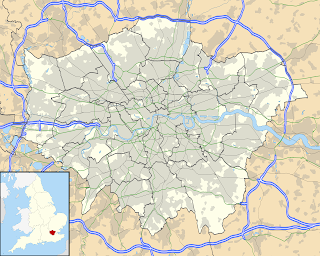
Greater London Ultra Low Emission Zone (ULEZ) coverage area

To say that the Mayor of London's expansion of the Ultra Low Emission Zone (ULEZ) to all of the territory of greater London under his authority has been controversial is an understatement.  For some it is a necessary response to climate change and the effects of local air pollution on public health, for others it is an impost on those who cannot afford a newer vehicles with benefits that are questionable, given that most vehicles comply with it already (hence it cannot have much of an impact).  Even Leader of the Opposition, Labour Leader Sir Keir Starmer has refused to back it.

The ULEZ started by being parallel to the London Congestion Charge in inner London, was expanded to the A406/A205 North and South Circular Roads. Its coverage of all of London includes rural areas and rural roads, as well as outer suburbs.

For a start it is important to be clear that the ULEZ is not road pricing. It is fundamentally a regulatory instrument that requires permits for vehicles that do not comply with the zone, in order to enter or drive within it. There is no relationship between the ULEZ and either the costs of providing road infrastructure or demand for it.  The fee is set at a level to dissuade use and generate revenue, and it is blunt. It doesn't matter if you drive a EURO 0 diesel van in crawling traffic beside a school or a EURO 3 petrol car at 3am on the motorway like A12 East Cross Route, you pay the same, even though objectively the local air quality impact is vastly different.  Although a vehicle scrappage scheme has been set up in parallel, owners of vehicles outside London are not eligible even though many cross into the zone.  Some categories of vehicles have exemptions, such as historic vehicles (e.g., vehicles built before 1973) vehicles registered to carry disabled people (until 24 October 2027), wheelchair accessible vehicles, drivers on specific disability benefits.  Those travelling to hospital appointments deemed unfit to use public transport can also apply for a refund. 

Vehicle scrappage scheme

All London residents can apply for up to £2,000 for scrapping a car or up to £1,000 for scrapping a motorcycle. For wheelchair accessible vehicles there is a payment of £10,000 to scrap or £6,000 to retrofit to the ULEZ standards. The scrappage scheme has been claimed by over 37,200 individuals or entities, which has cost £120m. The total budget for the scheme is £160m.  The biggest criticism of it, is that £2,000 will not come remotely close to buying a new vehicle, although it might come close to buying one that barely crosses the ULEZ standard.  However, it is unclear if the ULEZ standard advances (so EURO 4 petrol cars are no longer compliant), if people who took the £2,000 for scrapping a non-compliant vehicle, can claim it again if their latest vehicle is also non-compliant.  

ULEZ  impacts

There are a range of claims about the impacts of the ULEZ. 

Compliance rates for the ULEZ are reportedly 95% meaning the proportion of vehicles that meet the ULEZ standard. Of note, Heathrow Airport claims 7% of its employees drive non-compliant vehicles (and Heathrow is located just within the boundary of the ULEZ

The BBC claims this indicates revenue of around £23.6m per month. This is not inconsiderable, and certainly backs some claims that ULEZ is about revenue more than it is about environmental outcomes.  Van compliance is much lower than the average, with around 86.2% compliance.  However, City Hall claims it will generate no net revenue by 2026-2027, presumably as the costs of operating it are not exceeded by the fine and fee revenue generated (as it is expected few non-compliant vehicles will enter the zone). 

One claim is that ULEZ will reduce the number of cars on London roads by 44,000. Fewer cars means some people won't own a car anymore, which reduces their mobility. For some, London's ample public transport network and expansion of cycleways provide alternatives that may be reasonable for most trips, with carshare schemes plugging the gap. If people choose to give up owning a car because the cost isn't worth the benefit, and alternatives meet their needs, that's all very well, but if they are choosing to give it up because of the cost of ULEZ makes it unaffordable, it is clearly a policy measure that is pricing poorer households out of car ownership (because wealthier ones can afford a car that meets the standard).  

The Mayor of London has published a report on the first month after the introduction of the wider ULEZ. Its findings include:

  • 77,000 fewer non-ULEZ compliant vehicles per month identified than before its expansion (a 45% reduction), with a reduction of 48,000 unique vehicles identified overall (which may indicate non-compliant vehicles not being used, but compliant vehicles may be used more in some cases).
  • 96% of vehicles driving in Outer London meet the ULEZ standard (86% of vans).
  • On an average day only 2.9% of vehicles driving in the ULEZ pay the charge, 1.7% are registered for a discount or exemption and 0.2% are issued a Penalty Charge Notice.

What isn't clear is the impacts on air quality.

What about road pricing?

Beyond extending the operating hours of the central London congestion charge, there has been no changes to policy on road pricing in London since 2011 when the Western Extension was scrapped. Mayor Sadiq Khan has claimed there are plans to introduce distance-based road pricing in London, according to the Evening Standard.  Expanding road pricing in London has been discussed for some time, but it hasn't been advanced largely because:

  • Nobody (since Ken Livingstone) has been willing to spend political capital on making a cogent and consistent argument for wider road pricing across London;
  • The objectives of such a scheme have not been well defined. Mayor Khan's primary transport policy objective has been around local air quality, not congestion;
  • The options for road pricing across London have a significant upfront cost (in roadside infrastructure and potentially in-vehicle technology);
  • Central government has been keen to leave it as primarily a local matter, and for the Mayor of London and Greater London Authority to take the risk in advancing road pricing, rather than lead from Westminster.
London's geography lends itself to two broad options for more road pricing:
  • Zonal based boundaries, pricing for driving across parts of London (but not within zones). This would have the advantage of being relatively simple to understand, but would significantly disadvantage people and businesses needing to drive across multiple boundaries. In particular, businesses located adjacent to a boundary may feel aggrieved if part of their customers face a charge, which their rivals on the other side of the boundary do not.
  • Distance, time, location based pricing.  This is considered by some to be the best option because it offers unparalleled flexibility, and can address issues such as "rat-running" and can be set up to encourage more use of arterial routes over local roads.
Zonal boundaries can be implemented with Automatic Number Plate Recognition (ANPR) cameras, as has  been done for the ULEZ, but depending on the number of zones (there aren't obvious boundaries in some parts of London, and borough boundaries often make little sense from a road network perspective), it would involve a lot of images and a lot of processing, to distinguish between vehicles crossing different boundaries at different times and directions.

Distance/time and location based charging (once called TDP (Time Distance Place) pricing) would require some form of telematics.  Traditionally the thought has been that devices would need to be installed in vehicles to enable this, but the options of Original Equipment Manufacturer (OEM) telematics are beginning to emerge, along with self-installed GNSS dongles that plug into EOBD (OBDII in Europe) ports in newer vehicles or even mobile phones with apps. The latter options would still require location of some ANPR cameras to ensure vehicles drove with such systems operating.

However, the key question still to be answered is why do it?

Congestion, revenue and the environment

There is little doubt that road pricing on a wide scale in London could be transformative for the city's transport networks, productivity and environmental impact.  It could significantly reduce traffic congestion by spreading demand by time of day, route and mode, and in doing so would increase the capacity of existing bus services, and increase fare revenue across public transport.  However, to improve congestion would require taking a different approach than what happened with the central London scheme. In central London much road space was reallocated to other modes, which improved access by those modes, but rendered delays for much traffic to be little better than before, after the reallocation of road space.  It is understandable in the context of reducing car traffic, but for freight traffic (which mostly has little chance for modal substitution), it means they are paying to use road space with little improvement in the level of service provided.

Wide scale road pricing should change that. If there is plenty of excess capacity that might be well used for cycleways or footpaths, then reallocation of road space could be considered (bus lanes are less important if road pricing is introduced, unless there is desire to implement bus rapid transit). 

Most of all, to improve congestion there should be targets set for improved travel times, and for a change in approach and policy regarding congestion.  For decades congestion has been seen both as a problem, but also a tool to constrain traffic growth. However, congestion is a reflection of inefficiency and a very poor use of precious space.  Having consistently flowing traffic mean there is more usable capacity, and so those that pay get a better level of service as a result.  This has rarely been part of the narrative discussed around road pricing in London.

Revenue is important, and almost always the key focus, and plenty will be generated, but it will be key to consider carefully what to do with it. It seems unlikely that Londoners will back road pricing as "just another revenue source", without it making a difference for those who pay it.  Whether it be fixing the continuing backlog of road maintenance, or fixing intersections or corridors that have historic bottlenecks or poor design affecting congestion and safety, road pricing needs a commitment that at least some of the money will be used to ensure London's roads are fit for purpose. It could support undergrounding the Hammersmith Flyover addressing resilience and revitalising public space and land for other purposes, for example.

The environment would win out of road pricing regardless, as less congestion and less motor traffic, with more use of public transport and active modes all improving local air quality and reducing CO2 emissions. So there will be overall benefits environmentally, and the social benefits should come from improving mobility of bus services and accessibility more generally, as long as pricing matches demand and capacity, and is not punitive.  

What hope is there for such pricing?

Given the backlash on ULEZ, regardless of merit, it seems likely that the political appetite to introduce wide scale road pricing in London is likely to be low, certainly before the 2024 general election. After that, the next Government may have more appetite to advance it, knowing that unless it is advanced in London, it seems unlikely to get public support to be advanced in cities or regions which have inferior public transport options.

There remains a revenue issue from electric and hybrid vehicles which isn't going away, which might be solved in the short term by imposing higher Vehicle Excise Duty on such vehicles, but it is clear the appropriate medium term answer is some form of road user charging (RUC).  

However, whether it be revenue replacement with RUC or reducing congestion with congestion pricing (and generating revenue), the fundamental problem with road pricing in the UK remains the toxicity of the politics around an issue that for too many looks like a way to extract money from road users, with little to no talk about improving either the infrastructure  (which outside the national network is in woeful condition) or improving travel times from less congestion.

Until a political leader can communicate clearly about this, and ignore Treasury resistance to hypothecation of road pricing revenues and ignore political calls to treat pricing as a tool to make driving simply more expensive and less convenient, then it will continue to languish.


Wednesday, 22 December 2021

Will the Mayor of London introduce road pricing on a wide scale?

Transport for London (TfL) has a serious financial crisis due to ongoing declines in patronage of London Underground, Overground and bus services because of the Covid 19 pandemic. Patronage has never recovered to pre-pandemic levels, and now the Omicron variant has scared off many more passengers, with London Underground peak time patronage now at half of pre-pandemic levels. Given London Underground usually generates a net surplus of fare revenue over operating costs, this has had a severe impact on TfL’s finances.

The tools available to the Mayor of London are Council Tax (a tax on residents of London), fares and congestion charges, or to cut spending.  So far the UK Government has provided £4 (US$5.3) billion in assistance since the start of the pandemic, with another £1 billion in capital spending from the Spending Review (in part paying for the, still under construction, Elizabeth Line - formerly known as Crossrail). 

However, this is not enough. TfL is seeking £500 (US$0.66) m for the remainder of the 2021/2022 financial year, £1.1 (US$1.46)b for 2022/2023 and up to £500m for each of the following two years, plus guarantees of long-term capital funding. 

So there is pressure to save and raise more money, and the Mayor must come up with ideas, to get a longer term rescue settlement plan from the UK Government.  Part of this is politics, with the Mayor claiming he will have to scrap 100 bus routes, reduce frequencies on 200 others and possibly close one Underground line (which seems highly unlikely).  He is currently proposing to increase Council Tax by £20( US$26.50) a year, phase out free bus travel for people aged 60-65 and to keep congestion charges at the recently increased level of £15(US$19.90) a day.  I’ll focus on the road user charging based ideas.  It's worth remembering though that the London congestion charge is only imposed on a comparatively small part of London (see below)

London congestion charge zone as a part of greater London

London boundary charge

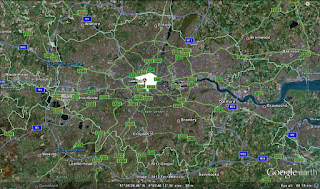
The Mayor has made various proposals, including a cordon charge for vehicles entering Greater London of £3.50 a day. That idea is particularly troublesome because the boundary of Greater London is not, as many think, the M25 motorway, but actually an administrative line that most Londoners would not know exists.  It would slice through Buckhurst Hill, part of Dartford, cut off Chigwell and Grange Hill from London, separate Borehamwood and Elstree from Barnett and Edgware, and Watford would be outside London. Moor Park would be divided from Northwood, Sunbury and Walton-on-Thames are on the wrong side of such a cordon and Long Ditton the wrong side from Surbiton.  Chessington would be inside, but Epsom outside. As can be seen in the map below, the boundaries are not well known and in only a few cases does the M25 actually represent the edge of London (e.g. adjacent to Heathrow). In short, it would mean a lot of communities, with relatively poor access options to neighbouring communities, would face a congestion charge, although it would effectively be just a toll – because it isn’t about congestion.  If it were, it might apply at peak times, but this is a money making proposal, albeit it would not be introduced until October 2023 (so it is not going to make much difference in the short term).

Ministers are not supportive of the idea and there is some uncertainty over whether the Mayor has the full legal powers to implement such a scheme.

Map depicting Greater London boundaries from Wikimedia  (Contains Ordnance Survey data © Crown copyright and database right, CC BY-SA 3.0)

London's "share" of Vehicle Tax

The idea with more merit is for Transport for London to receive some of the money raised by Vehicle Tax (what are effectively vehicle registration fees), which is currently almost entirely hypothecated for National Highways.  The Mayor’s estimate is that this is worth around £500m a year, although it is far from clear how much is spent on motorways in London in a year, it is likely to be much less than that.   

Of course this wouldn't mean the Mayor doing ANYTHING new, it's just a claim on an existing tax collected by the UK Government, which would then need to find the same money from elsewhere to pay for National Highways.

The argument of the Mayor is that London vehicle owners pay Vehicle Tax, but there are few motorways in London itself. This is true, but then I have long argued that there is a stronger case for Vehicle Tax to be hypothecated to pay for local roads not the strategic road network, because as a fixed charge, it makes more sense to pay for the roads that are used for access, not roads primarily used as arterials (which would be paid for by usage-based charges).  However, without changing the policy around use of Vehicle Tax more generally on those grounds (after all, why should London get such funding but not other municipalities), it seems unlikely that much of a case can be made for Transport for London to get such money for its roads. 

So that idea isn’t going anywhere either.

There is also a proposal to tax online deliveries (in London), which seems difficult to administer and enforce (as there would be a need to identify all those undertaking delivery activities, which can include anyone with a car contracted to deliver anything from a retailer). 

More road pricing?

The Government has been encouraging the Mayor to be more ambitious and implement a wider road pricing scheme to manage congestion and as a corollary, generate the revenue needed.  It appears the Mayor is not interested, having already implemented an Ultra Low Emission Zone (ULEZ) across a wide area (within the North and South Circular Roads) with some controversy, although it doesn’t raise much revenue.  However, what could the Mayor do?

The Mayor has considerable powers to implement road pricing, with the purpose of managing congestion, not raise revenue, so could consider a number of options.  Here are some of them:

1. Multiple zone charges: Whether area charges as at present (capturing all vehicle movement within an area) or more simple cordons, London could become a patchwork of congestion charging zones at peak periods. Crossing between zones could be subject to a charge, a little like underground fare zones.  The main difficulty with this idea is that it would seem inherently unfair for those living or with businesses located adjacent to a boundary to have to pay to travel in one direction, or to have a cost in the way of customers from that direction.  Unlike tube boundaries, it isn’t easy to soften that.  In any case, it could be an option, and it is not any less blunt than a greater London boundary charge.

2. Strategic corridor charges:  Congestion charges could be applied on some congested corridors, this could include some Thames Crossings (Blackwall Tunnels will have a toll introduced when the Silvertown Tunnel opens), parts of the North Circular Road, A40, A4, A13, A10 etc.  These would need to be carefully designed to minimise diversion of traffic, but could be implemented at specific times to lower congestion on those routes (and would generate revenue).  They could even be designed to exempt shorter trips by requiring vehicles to cross two or more points to be fully charged.  Key would be to only apply charges at times of peak demand, not all day like the current congestion charge.

3. Distance based charge with a high flat fixed fee:  The theoretical best solution would be to enable road pricing by distance, time and location, so those that drive the most miles, at certain times at certain locations, pay more.  Such a system could be trialled, using telematics systems already built into some cars and trucks, and new systems that could be installed in suitable vehicles.  Users could choose to pay by mile, or pay a high flat fee instead, at least during times of peak travel (such a system could be zero rated during off peak hours or weekends).  It could be limited to travel within the North and South Circular Roads, with those roads not charged, and could have charge rates that vary by route/road type (higher on B and unclassified roads, lower on A roads to discourage rat-running).  The big issue with this option is it needs time and needs vehicles to be suitably equipped with the technology to make it work (the idea in Brussels of using mobile phones for this is not without merit, but has bigger challenges around enforcement). 

Key to making any wider congestion pricing scheme be acceptable is that it needs to deliver a significant improvement in the level of service for those paying. That means it should ease congestion, considerably.  Net revenues should also ensure that road maintenance is at a suitably high standard because it would be inefficient and unfair to be paying by mile and have potholed roads.  It also means there should be some capital works to address bottlenecks, such as fixing Hammersmith Bridge, but also intersections that are poorly designed, and even plugging the grossly inadequate sections of the North Circular.

It seems unlikely such a radical step would happen, but if it did it would go a long way towards encouraging the sort of modal shift the Mayor says he wants, as well as reducing emissions and significantly improving the productivity of London – as cargo, commercial vehicle users and buses could all operate much more efficiently than at present.  Given around half of all London households don’t have a car, it seems likely that if presented as a package to avoid Council tax increases, improve congestion, improve road maintenance, make bus services more reliable and lower emissions, it might get support. 

Meanwhile... tinkering

Meanwhile, the Mayor has announced that he is cutting back the congestion charge operating hours from 0700-2200 to 0700-1800 (as it was before), which will cut revenue by about £60m a year, although it will still operate between 1200 and 1800 on Saturdays and Sundays. Discounts for fleets paying automatically or anyone paying automatically are to be abolished as well, effectively increasing charges for light commercial vehicles. This is, of course, just tinkering.


Monday, 24 August 2020

London congestion charge changes are more about raising money than congestion

London's congestion charge was pioneering, not because it was the first, or even the best congestion pricing scheme in the world (Singapore won that and still does), but because it demonstrated that congestion pricing could be introduced in a country and city with a very different political and policy culture.  It has evolved a little since then, but remains an area charge with a flat charge for access all day on weekdays.

It was a success, it achieved its original aims, as charged traffic dropped dramatically, allowing for road capacity to be taken from cars, vans and trucks, to be dedicated to buses, taxis, bicycles and in some cases pedestrian space.  However, its simplicity and its scale has proven its limitations.  These are:
  • Vehicles entering or driving within the zone pay once for a full day's access.  This encourages drivers to drive frequently once they pay, mostly discouraging occasional trips;
  • A significant proportion of vehicles driving in the congestion charging zone either do not pay or are heavily discounted.  Estimated at around half;
  • All vehicles subject to the charge pay the same. So a small car pays the same as an articulated truck (which takes up the space of three vehicles).
The Covid19 crisis has resulted in the UK taking drastic measures to establish social distancing in public, including addressing the risks of crowding on public transport in London.  Of course, the safest mode in social distancing is driving, but in London this is not physically possible for most trips towards inner London.  There simply isn't the road space to accommodate them.

Transport for London announced in June 2020 changes that are described as "temporary" purportedly to ensure car traffic "does not double", but the changes in scope go far beyond what is reasonable to do this (and in some cases don't do enough, because the congestion charging zone only covers 1% of the land area of Greater London.

Recent changes to the congestion charge mean it isn't really what it is called anymore.  Sure it is a "Road User Charge" according to Section 295 of the Greater London Authority Act 1999 but although it may resemble a scheme to manage congestion, the scope of operation is much wider.

Instead of simply operating 0700-1800 weekdays (excluding public holidays), its operating hours have been extended as follows:
  • Operating hours are now 0700-2200, leaving only nine hours a day which are not subject to the charge;
  • Operating days are now seven days a week, including all public holidays except Christmas Day.
Further changes are:
  • New applications for the Residents' Discount have been closed since 1 August;
  • The daily price has increased to £15 (US$19.70);
  • A new reimbursement scheme for relevant NHS and care home staff and patients;
  • The charge can now be paid up to three days after travel, at the higher rate of £17.50 (before it was two days).
Yes there is congestion during the day on Saturdays and to a lesser extent on Sundays, and early evenings it can also be congested (and later on a Friday night). However, by no reasonable measure can it be said that at 0700 on a Sunday that there is any congestion issue in central London, nor at 0800, or 0900 or 2100. 

The press release notes that the removal of the Residents' Discount is to deter car ownership for those living in central London, albeit that it seems reasonable that those living in central London pay to use the roads the same as everyone else. The price increase and some altering of operating hours would be justified, certainly to 1900 weekdays or beyond, and indeed Saturdays 1100-1800 and even Sundays 1200-1800 can be justified in parts of the central zone.  However, it seems that this is really about money as much as anything.  TfL faces a financial crisis due to the collapse in fares revenue due to Covid19 and the previous end of central government grants for operating subsidies.  

It's notable that TfL reports that only 0.5% of cars entering the charging zone do so daily (like a regular commuter), indicating that car trips that are taken tend to be occasional and are for very specific purposes (e.g. I twice drove into central London to pick up a friend after medical appointments).  Just over half only enter the zone once every six months, indicating that car trips to central London are much more deliberate than habitual, and so aren't necessarily able to be readily replaced by other modes.  

This is the point, virtually NOBODY drives to work in central London.  It is far too slow, and parking is too expensive. So the changes that have been made essentially capture leisure and shopping trips, but most importantly for TfL will generate new income. 

It isn't just about cars either, trucks and delivery vans are all captured, so deliveries and freight will now be charged more frequently. Private Hire Vehicles (minicabs) are also captured, but this will make little difference to them except at weekends, as vehicles are only ever charged for one trip, so extended operating hours on weekdays will not mean they are charged more.

London's problem is that the charging scheme as it stands is too inflexible to adapt to changing patterns and can't be extended easily under the current area charge model.  Although there is often talk about a GNSS supported distance based charge, this would require vehicles to be equipped with new on-board equipment.  A quicker approach would be to lay out multiple cordons (not area charges) with vehicles charged for entering and crossing different zones, similar to how some Italian cities have licensed permit zones for vehicles.

The biggest risk with TfL expanding the congestion charge's scope so bluntly is that it makes the idea that it is about managing congestion difficult for motorists to believe, and so trust in any other measures to expand charging will be low. There is little evidence that the Mayor of London regards reducing traffic congestion to be an important policy objective, whereas to gain the consent of motorists and more importantly, to deliver economic value from road pricing, the act of charging for road use should be in exchange for a better level of service.  

As was noted four years ago by the London Assembly, the current London congestion charge is not fit for purpose.  It needs to be transformed, but it's not clear that there is the political will, on either side of politics, to make a quantum leap in the performance of London's road network through a combination of pricing and investment in the network.

Tuesday, 27 March 2018

Did London's congestion charge increase pollution?

There has been some news coverage today of a presentation at the Royal Economic Society's annual conference from , Professor John Heywood, Dr Maria Navarro and Professor Colin Green (Lancaster University, University of Wisconsin- Milwaukee and the Norwegian University of Science and Technology respectively, I believe) which allegedly claims that the central London congestion charge caused an unintended increase in some forms of pollution, namely nitrogen dioxide  (by 20%), although it reduced carbon monoxide, nitrous oxides and particulates.

The Sun reported this, but TLE (The London Economic) reports it in more detail. The Royal Economic Society (RES) has a press release about the presentation.  

The obvious simple reaction to this is to say the congestion charge "doesn't work" in terms of pollution.  However, it is much more nuanced than this and worthy of more detailed investigation.  Since I don't have a copy of the presentation, my comments are limited to what has been reported.

Reviewing the key findings

The report says that there were "significant reductions across a range of pollutants" in comparison to "comparison cities" and of course, because the congestion charge did reduce road traffic volumes and there were reports at the time of reduced emissions, it is a fair assumption that the net effects should be positive environmentally.   The key element of this research was to consider the composition of pollution.   What isn't clear is how this was actually measured.

The RES press release said:

While some trips to central London simply may not take place, congestion charging policies seem more likely to change the method of transit. The charge made driving in London more expensive and generated improvements in bus services.

Improvement in bus services came about primarily because subsidies for bus franchises were increased so service frequencies could be increased, and some new routes introduced, and also the introduction of new bus lanes (and of course reduced congestion improved the ability to operate buses on existing roads).  The congestion charge helped raise revenue to support increased subsidies for buses, made reallocation of road space to bus lanes less disruptive for existing traffic and enabled some improvement in bus trip reliability.  

It continues: 

As might be anticipated, more travellers used buses and taxis in central London. This caused a move away from predominantly petroleum-based transport (private vehicles), towards diesel based transport (black cabs and buses).

This is true, although it's important to note that the mode-share for private car travel in central London was 12% in 2001 (before the charge was introduced).   The number of such trips dropped by around 33% between 2002 and 2006, but as a share of trips, it is still small.

Continuing:

The new study demonstrates reductions in three traditional pollutants: carbon monoxide (CO), particulate matter (PM10) and nitrous oxide (NO). These reductions are as large as 25% to 30% for PM10 and NO.  The researchers show that the reduced pollution per mile travelled in the zone exceeds that expected from the reduction in traffic flows alone. Thus, the reduction in these pollutants reflects, in part, removing very high levels of traffic congestion as well as reducing miles driven.

The evidence that reducing pollution is not just about reducing trips, but also reducing congestion (so the trips that remain operate more efficiently, and burn less fuel to travel the same amount of time).  This ought to have significant policy implications, because some environmentalists have treated traffic congestion as a tool to suppress car traffic, but congestion is not a positive.  It wastes time and energy, but also increases pollution.  Unfortunately, in recent policy debates about addressing air pollution in UK cities, the idea that policies that reduce congestion are worth pursuing seems to be ignored. 

Of course the study claims the NO2 increase of 10-20% is due to an increase in bus and taxi traffic.  TfL's own figures indicate around a 13% increase in the number of black cabs entering the charging zone between 2002 and 2006 (bear in mind black cabs** do not pay the congestion charge, neither do minicabs**.  There was also a 23% increase in bus trips, presumably almost all of that was due to TfL increasing services.

Traffic entering central London comparing 2002, 2003 and 2006 (Source: TfL)

From that there come a series of statements, which I think are worthy of questioning.

The authors argue that this increase is likely to reflect the shift towards diesel-based transport.
Thus, the congestion charge may have actually increased the harm from pollution.
They conclude that the reduction in congestion associated with charge simultaneously reduced some forms of pollution but had the unintended consequence of increasing more damaging forms of pollution.

Is this analysis damning of congestion charging as a policy from an environment perspective?

Of course, without having access to the full paper, it is difficult to be certain of my hypothesis here, but this is what appears to have happened.

1. The congestion charge co-incided with policies to increase bus services.
2. Black cabs, being exempt from the congestion charge, were able to undertake more trips under conditions of lower congestion than before.
3. With more buses (a deliberate policy initiative) and more black cabs (because more trips were easier and there was no congestion charge applying),  NO2 emissions increased.
3. Ergo "the congestion charge increased pollution".

This would appear to be an overly simplistic conclusion which could cause some policy makers or lobbyists to think congestion charging, per se, is not a good policy environmentally.  However, such a conclusion would be wrong.

What could London have done differently?

Politically, the congestion charge couldn't have been introduced without an exemption for black cabs, and the expansion of bus services was intended to offer an alternative for some private car trips (although it is unclear whether there was much of a modal shift from car to bus, as it is more likely the underground and rail services took some of the trips).  However, the congestion charge as a policy in itself was not specifically responsible for an increase in diesel vehicle trips and NO2 pollution.  

The congestion charge introduced a flat charge on private cars and goods vehicles (the latter saw a 13% decline in trips between 2002 and 2006), but did not charge buses nor taxis (of any kind).  So it is hardly surprising that while private car and goods traffic declined, the vehicles not subject to a charge increased in trips.  In other words, the congestion charge reduced pollution from the vehicles that it charged, but not the vehicles that it did not charge, in terms of NO2.  Bear in mind that the proportion of diesel cars in the UK vehicle fleet increased during this period (not least because of misguided changes to vehicle excise duty intended to reflect CO2 emissions only).

Technology has progressed since 2003.  30% of London buses are now hybrids, with 0.8% now zero-emission electric and fuel-cell vehicles. So a similar increase in bus services today would mean a lower increase in emissions, particularly if priority was given to putting new hybrid vehicles on central city routes.  However, although increasing the capacity and frequency of bus services is a logical complementary policy to congestion charging, and may be desirable (depending on the design of the charging scheme itself) it is not absolutely essential and certainly today, with the engine technology available (notwithstanding cities with trolley buses who can always claim zero emissions from such vehicles), it does not necessarily follow that more buses means higher NO2 emissions.   I suspect that had London not increased bus capacity (by increased frequencies, but rather taken the gains from reduced congestion to improve trip reliability), although the congestion charge itself may have been marginally less effective, NO2 would not have increased as was reported.  

For black cabs it is simpler, as there isn't a compelling policy reason why people who choose to travel by taxi into or around central London should be preferred over those who bring their own car.   Bear in mind that black cabs circulate "empty" searching for fares, contributing to both congestion and pollution, whereas a private vehicle always undertakes a "useful trip" in transport utility terms and when it isn't, it is not polluting or contributing to congestion.  Stockholm, Gothenburg and Singapore do not make any taxis exempt from their urban congestion charging schemes. Transport for London has been consulting on removing the exemption for minicabs (but not black cabs).   To be fair, had black cabs not been made exempt, they would have opposed the congestion charge and been a problem for the Mayor in introducing the charge.  However, if the exemption were removed, it is not clear how much of a difference it would make with the current charge structure.

The congestion charge is set at £10.50 (US$14.93) for unlimited trips within the zone, for vehicles registered with Autopay (which means vehicles are automatically charged when detected entering or circulating within the zone, rather than having to consciously pay for a trip each day in a separate transaction).  It seems likely that most black cabs (and minicabs) would absorb this in their fares and spread that cost, although there will probably be a small incremental reduction in vehicles.

Conclusion

The congestion charge did NOT increase pollution, in fact the report quoted states that with the exception of NO2, other pollutants reduced.  However, given the information presented, it is not the congestion charge that is to blame. It is the increase in bus services, approved by the Mayor of London (using the engine technology of the time) and the increase in black cab trips (exempt from the congestion charge) that appears to be the evidence for a causative relationship in increasing NO2 pollution being attributed to the congestion charge.

It would be highly misleading to draw the conclusion that introducing congestion charging today or expanding it would have the same result.  Hybrid or electric buses can mean bus services can be increased without the same result, and taxis (both kinds) need not be exempt at all (they aren't in other jurisdictions).


* The press release stated the City of London introduced the congestion charge, but it was Transport for London (as the area charge crosses the boundaries of several other boroughs, most notably Westminster, but also Camden, Southwark, Lambeth, Islington, Tower Hamlets and Hackney).

** For those unfamiliar with the split in the taxi industry in the UK: Minicabs (legally "private hire vehicles") tend to offer fixed fares, are not metered and are only allowed to pick up passengers on pre-booked trips (which may be by phone, online or by asking at a minicab office, in which case a minicab may be available immediately). Black cabs (legally "licensed hackney carriages") are metered and are legally entitled to pick up "hailing" passengers (people who flag down a taxi in the street or request a trip from a taxi rank).  Black cabs can also offer fixed fares to passengers and be pre-booked, just like minicabs, but the licencing requirements for black cabs are stricter.  Both types of taxi are licensed by local authorities (but in London by Transport for London).

Monday, 23 January 2017

London Assembly calls for congestion charge reform

The Greater London Assembly Transport Committee has released a report calling for both short term and long term measures to reform London's congestion charge, coming to the solid conclusion that the charge in its current form is not "fit for purpose".  The Committee has little actual power, as the matter is up to the Mayor (the Assembly is meant to hold the Mayor to account, but the Mayor has considerable Executive power).  The current congestion charge raises £168m net revenue a year.

London's congestion charge zone


Its report is available here (PDF) and makes a series of recommendations which I have listed below.  


1.  In the short-term, the Congestion Charge should be reformed, so the payments levied better reflect the impact of vehicles on congestion. The daily flat rate should be replaced with a charging structure that ensures vehicles in the zone at peak times, and spending longer in the zone, face the highest charges. 

For the longer-term, the Mayor needs to start to develop proposals now for replacing the Congestion Charge with a new citywide road pricing scheme, which charges vehicles according to the extent, location and timing of their road usage. Road pricing could also replace Vehicle Excise Duty, which should be devolved by the Government to the Mayor. There may be a case for the scheme to be wider than the existing Congestion Charge zone; discussions with all boroughs should take place to determine whether and how road pricing should cover their local road network. 

The Mayor’s forthcoming Transport Strategy should set out plans for both Congestion Charge reform and for the potential introduction of road pricing. The Mayor should also update the committee by the end of April 2017 about discussions with the government on the devolution of Vehicle Excise Duty.(which is not a London matter, but the Mayor wants devolved to London).  (this is what I will be focusing on in this blogpost)

2. TfL should ensure that new monitoring technology introduced to identify vehicles in the proposed Ultra Low Emissions Zone should be compatible with the future requirements of a road pricing scheme. TfL should confirm it will do this when responding to the recent consultation on ULEZ proposals. (i.e. ANPR, but by the time road pricing is introduced it may need renewed anyway)

3. TfL should take steps to encourage bids from boroughs interested in piloting a local Workplace Parking Levy. Provided the plans fit with any wider road pricing scheme, TfL should offer support to a WPL pilot programme if proposed by a borough. This should include offering additional funding to the borough(s) to initiate the scheme.  (I'm not a fan of taxing parking places for commuters, particularly in suburban centres, because the modal alternatives for commuters are often poor, so it can be a tax on small businesses seeking to attract labour, and there is little evidence they effectively address congestion).

4. The Mayor and TfL should take steps to encourage more delivery consolidation. This will involve working with those running large construction schemes and retailers, potentially through Business Improvement Districts. The new London Plan should promote consolidation for new developments. TfL should also work with London Councils to reduce restrictions on night-time deliveries.  (the latter is all about noise in residential or mixed use areas, although restrictions could be lifted if linked to more electric trucks.  Delivery consolidation will occur if roads are priced efficiently)

5. TfL should pilot a ban on personal deliveries for staff. Based on the findings, the Mayor should consider extending this to all GLA Group premises, and promote this change in practice to other large employers in London. (I'm not a fan of this heavy handed approach which was justified because people can "pick them up at tube stations".  This assumes people live near tube stations, over half of London doesn't.  Efficient road pricing would mean the price of such deliveries could vary to reflect such costs, obviating such an illiberal policy).

6. TfL should reconsider its approach to ‘click and collect’ at Tube and rail stations. Stations should be identified for a pilot programme in which multiple retailers and/or freight operators can deliver packages to a station for collection.(This should certainly be tried where it makes business sense and is practicable and safe).

7. he Mayor should set out how his new regulations for the private hire industry and the legislative changes he is advocating will affect congestion levels in London. He should also commit to assessing the impact of making private hire vehicles subject to a new road pricing regime, and different options for implementing this proposal. (rational to require private hire vehicles to pay any new road pricing scheme, but a similar case can be made for hackney carriages "black cabs" to do so as well).

8. TfL should conduct and publish an analysis of the impact of the Road and Transport Enforcement Team and, if it is proven to be cost-effective, set out plans to expand the size and coverage of the team. (this group focusing on breakdowns, stoppages, illegal stops and other activities that create congestion.  Logical). 

9. The Mayor and TfL should carry out an assessment of the effectiveness of the London Permit and Lane Rental schemes for roadworks. This should be aimed at ensuring the cost of delayed roadworks on London’s road users is reflected in the amount companies must pay. (Appropriate for a scheme that should be part of what any good road controlling authority does for utility access to its corridor).

10. TfL should continue to implement its Road Modernisation Plan schemes including the proposed network of safer cycling routes such as Cycle Superhighways and Quietways. It should report back to the committee by the end of April 2017 on how the construction of additional Superhighways and other major projects will be planned more effectively to minimise traffic congestion. (the "Road Modernisation Plan" needs some more economic rigour, taking into account impacts on congestion and modal shift.  It's not clear how these projects positively impact on traffic congestion, if at all. Theoretically there is plenty of scope for projects to improve the capacity of intersections, although road pricing revenue may be needed to fund those that need land acquisition).

11.  TfL should conduct and publish an analysis of the impact of the pilot scheme displaying traffic notices on buses and, if it is proven to be cost-effective, set out plans to roll out the programme more widely.  

Of Committee members, the UKIP Member disagrees with recommendations 2 and 3, and partly with 1 and 10.

Congestion isn't about growing private car use

The report says:

"The mode share of private vehicle transport has fallen in recent years, from 41 per cent in 2003 to 32 per cent in 2014"

"Londoners’ usage of cars has been falling for at least ten years. Between 2005 and 2014, all the key measures of car use – trips taken by Londoners as a car driver, the distance travelled and time spent driving – all fell by around 25 per cent"

In other words, public transport use has been growing significantly.  However there has been an 11% increase in light delivery vehicle kms in three years, which can put down to internet shopping.   There has also been a 70% increase in private hire vehicles in under four years.  Both can be seen as partly an effect of reduced car use.  If you don't have a car, it is difficult to go shopping for goods over a certain size to take them home, so deliveries grow.  Similarly, public transport doesn't take you everywhere you want to go, especially in evenings, or when carrying a lot of shopping or luggage, so booking a private hire vehicles makes sense.

Corresponding to this has been reductions in the capacity available to motor vehicles, with the advent of more cycling lanes and in a few cases, footpath capacity.

Cycling has been increasing in popularity, but it is likely this is mode shift from buses and the underground, not cars given the low mode share for cars in any case.  In short, London has successfully made commuting by private car uncompetitive in central London (although not outer London), and has not added significant road capacity for over 15 years, but non-car traffic has grown considerably.  The question is how to address this.  

Short term reform

The profile of traffic in the congestion charging zone by time of day doesn't match the AM peak inbound, PM peak outbound pattern seen in many cities.  In fact, there is more traffic around 0900-1000 than at 0700, because very few commuters into central London travel by car.   The congestion charge is an area charge.  So any vehicle (that isn't exempt) moving within the area is charged a flat fee for unlimited driving in the zone that day.  It would be possible to have a different rate for different times, but that could split the charge into period passes.  There could be a charge for driving in the AM and a separate one for the PM period, or a pass for a two hour period, although that adds complications to the system.  An alternative would be to actually trial distance charging, which simply measures distance on the charged roads and to hike the daily charge considerably (making that the capped rate for driving in the zone).

Truth be told, very little that can be done with the congestion charge would make much of a difference, except perhaps charging all private hire vehicles (and black cabs - as controversial as that will be, to them) by distance.  This might be possible as a part of their licences, and would be a good start (as it could encourage mode shift to public transport and reduce the number of empty touting trips by black cabs).   Another point would be to charge heavy vehicles on a PCU (passenger car unit) basis, so that they pay according to road space, although I doubt this would make much difference, it would be fairer. 

Long term reform

It's fairly obvious that charging all vehicles (except perhaps contracted bus services) by distance, vehicle size, location and time of day, could transform road traffic conditions in much of London. That's assuming such a system would price with a high degree of disaggregation by time of day and route.  No doubt, the idea of using it to replace Vehicle Excise Duty (the UK's annual registration fee) would make it more acceptable, although if it means transferring revenue from central government to the Mayor of London, it is more questionable unless the use of revenue is dedicated, first, to maintaining and upgrading the road network.   The obvious question would be about fleets and other road users who might register vehicles at London addresses and never pay VED and pay little "London road pricing" because they rarely enter London.  

A survey undertaken as part of the report (PDF) indicates a number of interesting statistics:

70% of those surveyed had not paid the congestion charge in the past year.
48% support the current congestion charge, 27% oppose it, 25% are neutral.
54% think the congestion charge is too high, 11% think it is too low, 27% think it is about right (interesting it is women, younger people and non-white Londoners who particularly think it is too high)
50% would prefer a distance (or time based) charge instead of the current flat charge, 20% oppose
47% support local congestion charge zones, 21% oppose
29% support expanding the existing congestion charge zone, 41% oppose
60% believe a distance charge would be fairer, 13% disagree
41% believe a distance or time based charged would be bad for business, 17% disagree
37% believe a distance or time based charged would make journey times quicker, 19% disagree, 44% neutral
27% believe they would be likely drive less if they faced a distance or time based charge, 15% disagree, 25% are neutral, 32% don't drive
55% believe net revenue from road pricing should be used for improved public transport, 21% believe it should be used to improve roads, 12% believe it should be used for cycling infrastructure (note a third of respondents don't drive but are included in this).
64% of those surveyed in employment don't drive to work.
30% support workplace parking levies, 39% oppose, 30% neutral

The three big questions to ask about a wide scale scheme as proposed are:

1.  What about visitors to London?  Any time/location/distance based system will need to involve either on board telematic or an installed on board unit to identify, measure and transmit charging information from vehicles.  For vehicles without such systems, an alternative will be needed, which inevitably will be much less disaggregated, blunter and more expensive.  For example, London could be blanketed with a patchwork of area charges that occasional users pay a charge to cross into. Otherwise, a single, expensive day pass could be offered for entering London, perhaps one for outer London and another for inner London.  In either case, the impacts of this need to be modelled and carefully considered.

2. What should be done with net revenues?  Road users should expect that if they pay a lot more, they get a good standard of service.  A lot of roads need serious capital renewal due to poor maintenance. Bridges with weight restrictions could be strengthened, but more importantly, bottlenecks that are worth improving should be.  The Mayor seems to have dropped planned for new east-west road tunnels, but there is much that can be done to improve some existing corridors with historic bottlenecks.  Road pricing can curtail induced demand and make such improvements sustainable, and those who pay should expect an ongoing programme of capital improvement.  

3. What about other charges?  The congestion charge would go of course, and it's unlikely Vehicle Excise Duty would be replaced, especially since it is government policy to hypothecate the revenue for the strategic road network (although I think it should be hypothecated for local roads only).  How about it being a pilot for partially replacing fuel duty?  Fuel duty revenue is in decline, not just because the government wont increase it to adjust for inflation, but fuel efficiency and the rise of electric/hybrid vehicles means it is becoming slowly obsolete.  Public acceptability would be much higher, and the impacts may be more dramatic if existing taxes are replaced by carefully targeting congestion.

Hopefully the Mayor will consider a study into how to take road pricing further in London.

Thursday, 18 August 2016

Mayor of London proposals on emissions charging resemble expansion of congestion charge

London's new Mayor, Sadiq Khan, was elected on 9 May and although his manifesto showed no interest in changing the congestion charge, he has made one of his top priorities addressing air quality in the city. 

The Transport for London website claims that London breaches EU legal limits on Nitrogen Dioxide (which may not necessarily be a legal matter once the UK leaves the EU, but that doesn't mean there isn't a problem!), and that pollutants "cause" the equivalent of 9,400 deaths in London per annum.  I'm always a little wary of statistical correlations between alleged causes and effects when the actual affects are more likely to be discreet, cumulative and one of multiple factors in accelerating deaths.  It is always a good headline, but there is little sense of the historic state of air quality.  London has come a long way from pea-soup smog (it wasn't fog) due to coal being burnt to heat households, businesses and generate electricity in the 1950s, with gas heating, energy efficiency, the demise of steam locomotives, relocation of port activities to Tilbury and beyond.   Road vehicles are cleaner burning than they have ever have been, although the misguided fiscal encouragement towards purchases of light diesel vehicles in the 2000s (to reduce CO2 emissions) has not helped as low CO2 has come at the price of particulate emissions, which are one of the most serious contributors to respiratory diseases.  

London has severe congestion, which is a contributor to pollution, because the idling times and low traffic speeds mean emissions per vehicle mile are higher than they would be if congestion were lower.

The Mayor of London has decided to consult on using charging as part of a programme to reduce emissions.  

London's existing Low Emission Zone

London already has a Low Emission Zone (LEZ), which was introduced in 2008.   It applies to all roads in London, excluding the motorways (which of course only serve destinations that are on local roads).  It requires the following vehicle standards:

- All trucks, buses and coaches must meet at least the Euro IV standard for emissions;
- All larger vans and minibuses must meet at least the Euro III standard for emissions.

All of Greater London is the area of the Low Emission Zone
The LEZ does not apply to smaller vehicles.  Vehicles that do not meet those standards either must be retrofitted to do so, or be subject to a daily charge for driving in London of £100 or £200.  It is intended to ensure commercial vehicles in London meet fairly average emission standards.  Euro 3 came into force in 2000 and Euro 4 in 2005, so it is not a significant burden to expect most such vehicles to meet those standards.  It wouldn't be unreasonable to uplift that to Euro 4 for light commercial and Euro 5 for heavy vehicles by 2020.  

Yet there is no evidence that the LEZ has had any measurable impact.   According to Citylab, a study from two years ago indicates the LEZ has had NO impact.  There are some guesses made as to why, such as how newer vehicles may be reducing NOx by less than forecast (and one may also surmise that if there has been extensive fraud in emissions testing by manufacturers, that they are somewhat to blame.  Another is that the growth in the number of diesel cars has offset the improvements in heavy vehicles.  Of course the LEZ has no impact on that, and the UK Government has only reformed Vehicle Excise Duty (annual registration fees) to remove the advantage low CO2 (diesel) vehicles get from that tax. 

Mayor's proposals

  • bring the implementation of the central London Ultra Low Emission Zone (ULEZ) forward by one year to 2019;
  • expanding the ULEZ beyond central London in 2020;
  • introducing a new Emissions Surcharge from 2017 for the most polluting vehicles entering central London;
  • giving TfL the go-ahead to start looking at a diesel scrappage scheme as part of a wider national scheme run by the government;
  • keeping Londoners better informed and alerted when pollution is at its worst;
  • making sure TfL leads by example by cleaning up its bus fleet and buying only hybrid or zero emission double-decker buses from 2018.
The fourth, fifth and sixth proposals are nothing to do with road charging, but the other three are, and could have quite a significant impact on the cost of driving in London for vehicles that are not eligible.

Tuesday, 19 April 2016

What should the next Mayor of London do with the congestion charge?

London will have a new Mayor after the 5th of May.  The incumbent, Boris Johnson, is not standing again (he won a Parliamentary seat in the 2015 election and has his eyes on national politics) so the race is wide open, and this time the two leading contenders are existing MPs with both major political parties.  Polls indicate the Labour candidate, Sadiq Khan, has the lead, with Conservative candidate Zac Goldsmith facing an uphill battle to keep the Mayoralty for the Conservative Party.  Goldsmith doesn't have the profile or charismatic celebrity factor of Boris Johnson, and may also be disadvantaged by Labour having done much better in the General Election in London than nationwide (the Conservatives won the election across the UK, but in London Labour won more seats).   Notably, this is the first election since 2000 that Ken Livingstone isn't standing (he won in 2000 and 2004, lost in 2008 and tried once more in 2012).  London has had two Mayors (of greater London, not including the 32 boroughs within it) since the position was created in 2000.  

Now defunct Western extension of congestion charge zone highlighted
What's notable in the narrow world of road pricing is how a policy that was divisive in 2000 and 2004 elections - the congestion charge - is now not at all controversial.  Neither major candidate, nor the candidates for the three largest minor parties (Liberal Democrats, Greens and UKIP) are campaigning to abolish or shrink it.   Notably in his first term, Boris Johnson abolished the "Western extension" of the congestion charge zone, a rather blunt attempt to manage traffic in the Chelsea and Kensington suburbs to the west or a political hit by then leftwing Mayor Ken Livingstone at one of the wealthiest parts of London.  That's long been forgotten, and after an almost imperceptible increase in traffic, it wont be coming back.   However, it is also notable that the proposed new Silvertown Tunnel (a new Thames Crossing primarily to relieve the heavily congested Blackwall Tunnels - a pair of two-lane one way tunnels in east London) will be tolled along with the existing Blackwall Tunnels.  This is, in effect, a new congestion charge on an existing road, although it is in part justified to raise sufficient revenues to pay for the new crossing, it will help ensure all of the capacity along the route is effectively managed.
London's existing congestion charge zone covers a small area of greater London

Neither Sadiq Khan nor Zac Goldsmith have said much about the congestion charge.  Khan's big transport policy gimmick is to promise a freeze on public transport fares, to be funded from administrative savings (although the scope for this is disputed), Goldsmith has largely promised business as usual with more cycle lanes, improved public transport, an additional road crossing of the Thames (there is around a 17 mile gap between the Dartford Tunnels and the planned Silvertown Tunnel) and action on air pollution. Khan has since said he is uninterested in increasing the congestion charge, but Goldsmith is, at least willing to look at "smarter" charging.
Planned tolled Silvertown crossing

Beyond the two main candidates (the electoral system is preferential based, so it almost certainly will be between these two), the Liberal Democrat candidate - Caroline Pidgeon - wants an additional charge on the most polluting diesel vehicles (the congestion charge zone is already going to become an ultra low emission zone from 2020).  Green Party candidate - Sian Berry - is the most ambitious, wanting congestion charging expanded across London, based on distance, time, location and emissions rating, with all net revenue dedicated to increased subsidies for public transport and active transport modes (and the implication that cars and trucks will have punitive charges imposed on them).

 On the face of it, that seems much closer to the sort of vision I have for charging in London, although it does have three big issues:
- Public acceptability;
- Efficient use of net revenues;
- Treatment of non-London users. 

So what would I do?